
History-Politics
Colonial

From pre-history to today
Provincial

Poltics in BC History
Federal - Provincial
Colonial
Provincial
Federal - Provincial
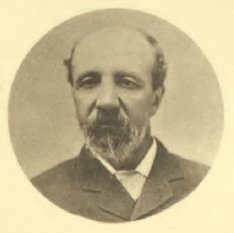
Andrew Charles Elliott was the fourth Premier of the province of British Columbia, Canada, serving from 1876 to 1878. He was a member of the Conservative Party and served as Premier during a time of economic difficulties in the province. He was defeated in the 1878 election by the opposing Liberal Party led by George Anthony Walkem.
During Andrew Charles Elliott's tenure as Premier of British Columbia, the province faced several economic challenges. The main issue was the depression caused by the collapse of the British Columbia's main industry, the fur trade. This was coupled with a decline in the mining industry, leading to high unemployment and financial difficulties for many residents.
In addition, the province was facing a financial crisis caused by large debts accumulated by the previous government. Elliott's administration struggled to address these issues and implement policies to stimulate economic growth. The government also faced criticism for its handling of the Chinese immigration and the treatment of Chinese immigrants who were brought to the colony to build the Canadian Pacific Railway.
Elliott's administration also had to deal with the ongoing conflict between the government and the indigenous peoples of the province, particularly the Nlaka'pamux and Secwepemc nations. The government's policies towards the indigenous people were often criticized as being exploitative and unjust.
Overall, Andrew Charles Elliott's administration faced several economic and social challenges that it struggled to address effectively, which ultimately contributed to his party's defeat in the 1878 election.
During Andrew Charles Elliott's tenure as Premier of British Columbia, which lasted from 1876 to 1878, several significant events took place. Some of these include:
The completion of the Canadian Pacific Railway: The Canadian Pacific Railway, which was built to connect British Columbia with the rest of Canada, was completed during Elliott's tenure. The railway brought economic benefits to the province, but also led to the displacement of Indigenous peoples and the exploitation of Chinese labor.
The Esquimalt Graving Dock: In 1877, the Esquimalt Graving Dock was opened. It was the first drydock on the west coast of North America and was built to service British naval ships in the Pacific.
The Anti-Chinese Movement: There were growing tensions and agitation against Chinese immigrants, who were brought to the colony to build the Canadian Pacific Railway. The Anti-Chinese movement led to the passage of the Chinese Immigration Act in 1878, which imposed a head tax on Chinese immigrants.
The Cariboo Road Scandal: In 1877, it was revealed that the government had mishandled the funds allocated for the construction of the Cariboo Road, which was intended to connect the gold fields of the Cariboo region to the rest of the province. The scandal led to the resignation of several government officials and contributed to the defeat of Elliott's government in the 1878 election.
Timeline
This article will be posted shortly. British Columbiahistory.com is a visitor supported web site. Thank you for your feedback - it is appreciated.
Reference: Article by Greg Scott (Staff Historian), 2023
Tel: 1 604 833-9488
Email: info@canadahistorysociety.ca

All content and images are protected by copyright to Access History