
History-Periods
Past eras

From pre-history to today
Choose your period

Pre history - Present
explore the different eras
Past eras
Choose your period
explore the different eras
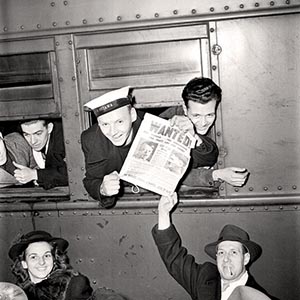
Canada officially entered World War II on September 10, 1939, one week after the United Kingdom and France declared war on Germany following the invasion of Poland. Canada, as a member of the British Empire, was automatically at war due to the country's constitutional ties to the UK. Prime Minister William Lyon Mackenzie King declared war on Germany in a speech to the Canadian House of Commons, stating that Canada would "actively and wholeheartedly" support the war effort. Canadian troops were sent to fight in Europe, Africa, and Asia, and also played a significant role in the Battle of the Atlantic. Additionally, Canadian industry and agriculture were mobilized to support the war effort, and thousands of Canadians also served in the Royal Canadian Air Force and the Royal Canadian Navy.
British Columbia, played a significant role in the country's involvement in World War II. The province's location on the Pacific coast made it a strategically important location for the defense of North America and the protection of shipping lanes.
The Royal Canadian Navy established a base at Esquimalt, near Victoria, which served as the home port for several naval vessels and was an important training and supply center. The Royal Canadian Air Force also had a presence in British Columbia, with airfields and training facilities established throughout the province.
British Columbia's economy also played a vital role in the war effort. The province's shipyards and sawmills produced materials for the construction of naval and merchant vessels, while its mines and forests supplied raw materials for the production of weapons and ammunition. Agriculture and fisheries also played a key role in feeding the Canadian and Allied troops.
British Columbia residents also served in the Canadian armed forces and in the civilian war effort. Many enlisted in the military, while others participated in the war effort by working in industries that supported the war, joining the Canadian Women's Army Corps, or volunteering for the Red Cross and other organizations.
In summary, British Columbia was an important location for the defense of North America and the protection of shipping lanes, and also played a vital role in the war effort through its economy and its residents participation in the military and civilian war effort.
Timeline
The Second World War had a significant impact on culture in British Columbia, as it did throughout Canada. The war effort required the mobilization of the entire country, and this had a profound effect on the daily lives of British Columbians.
The war effort led to a decrease in leisure activities and an increase in rationing and shortages of consumer goods. This had an impact on the way of life and culture. Many of the young men and women were enlisted in the military, which led to a shortage of labor in some industries, and a change in the gender roles in the workforce.
The war also led to an influx of immigrants and refugees in British Columbia, particularly from Asia. This led to a diversification of the population and a change in the cultural makeup of the province.
On the other hand, the war also brought about a sense of unity and nationalism among British Columbians, as they united to support the war effort. It also brought about a sense of patriotism and sacrifice, which was reflected in the art, literature, and music of the time. Many artists and writers produced works that depicted the war effort and the sacrifices made by Canadians.
British Columbiahistory.ca is a visitor supported web site. If you would like to submit an article or opinion, please visit our blog at www.blog.British Columbiahistory.ca.
Reference: Article by (Staff Historian), 2023
Tel: 1 604 833-9488
Email: info@canadahistorysociety.ca

All content and images are protected by copyright to Access History