
History-Periods
Past eras

From pre-history to today
Choose your period

Pre history - Present
explore the different eras
Past eras
Choose your period
explore the different eras
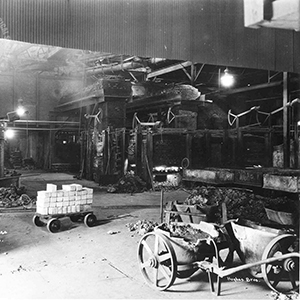
The Trail Smelter in Trail, British Columbia, Canada, was established in the late 1800s and was one of the first lead and zinc smelters in the country. The smelter was built by the Canadian Pacific Railway to refine the increasing amounts of silver and other metals being extracted from the nearby mines. The smelter operated for several decades and played a significant role in the development of the region's mining industry.
The Trail Smelter in Trail, British Columbia, was primarily a lead and zinc smelter. It was built to refine metals, such as silver and other metals, that were extracted from nearby mines in the region. The smelter was an important component of the region's mining industry, processing and refining valuable minerals extracted from the surrounding area.
The Canadian Pacific Railway (CPR) built the Trail Smelter in Trail, British Columbia, as part of its efforts to diversify its business operations and increase its profitability. The increasing amounts of silver and other metals being extracted from the nearby mines provided an opportunity for the CPR to enter the refining business, which was a natural complement to its transportation operations. The smelter was also strategically located near the CPR's transportation network, which made it easier to transport the refined metals to markets. By building and operating the Trail Smelter, the CPR was able to tap into a growing market and secure new sources of revenue.
Yes, the Canadian Pacific Railway (CPR) received government support for its expansion into the Trail area in British Columbia. The CPR was a major infrastructure project that was seen as essential for the economic development of Canada in the late 19th century. As a result, the Canadian government provided financial assistance and other forms of support to the CPR to help it build its transcontinental railway and expand into new markets. This support was crucial in enabling the CPR to build the Trail Smelter and establish a presence in the region. The smelter was seen as an important component of the government's strategy to develop the mineral resources of the area and spur economic growth.
The Trail Smelter in Trail, British Columbia, had a positive impact on the mining industry in the region. The smelter was built to refine the increasing amounts of silver and other metals being extracted from nearby mines, and its operations helped to stimulate further exploration and development in the area. The availability of a local smelting facility made it easier for miners to process their ore and sell their metal products, which encouraged the growth of the mining industry in the region. Additionally, the presence of the smelter attracted other industries and businesses to the area, creating jobs and stimulating economic activity. Overall, the Trail Smelter played an important role in the development of the mining industry in British Columbia.
Timeline
The mining industry in British Columbia, Canada, attracted interest from the United States due to the presence of valuable mineral deposits in the region. The abundant natural resources in BC, such as silver, lead, and zinc, were attractive to American mining companies and investors. These companies saw the opportunity to invest in the region's mining industry and tap into its vast mineral wealth.
Over time, many American companies established operations in BC, either by acquiring existing mines or by establishing new ones. American interests in mining in BC also helped to spur economic development in the region and create new jobs. However, the presence of American companies in BC also raised concerns about foreign ownership of the region's resources, which was a sensitive political issue in Canada at the time.
British Columbiahistory.ca is a visitor supported web site. If you would like to submit an article or opinion, please visit our blog at www.blog.British Columbiahistory.ca.
Reference: Article by (Staff Historian), 2023
Tel: 1 604 833-9488
Email: info@canadahistorysociety.ca

All content and images are protected by copyright to Access History