
History-Periods
Past eras

From pre-history to today
Choose your period

Pre history - Present
explore the different eras
Past eras
Choose your period
explore the different eras
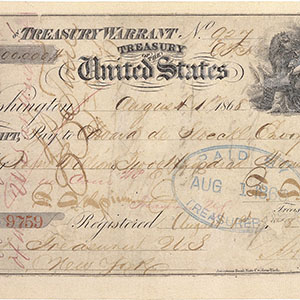
William H. Seward was an American statesman, politician, and diplomat who served as the United States Secretary of State from 1861 to 1869. He is best known for his role in the purchase of Alaska from Russia in 1867, which is often referred to as "Seward's Folly" or the "Seward Purchase."
The Alaska Purchase was a treaty signed on March 30, 1867, in which the United States acquired the territory of Alaska from Russia for the sum of $7.2 million, or about two cents per acre. At the time, many people thought the purchase was a waste of money, as Alaska was seen as a cold, remote, and uninhabitable region with few natural resources. However, in the years following the purchase, it was discovered that Alaska was rich in minerals, timber, and oil, and the territory has since become an important part of the United States.
Seward is remembered as a key figure in the expansion and development of the United States, and Alaska is now a state of the union.
William H. Seward, the United States Secretary of State from 1861 to 1869, made a visit to Victoria, the capital city of British Columbia, in August of 1869. The purpose of Seward's visit was to negotiate a settlement of the boundary dispute between the United States and British Columbia, which had arisen due to the uncertain location of the border between Alaska and British Columbia following the Alaska Purchase in 1867.
During his visit to Victoria, Seward met with the Governor of British Columbia and other officials to discuss the boundary dispute and potential solutions. He also delivered a speech to the citizens of Victoria in which he outlined the history of the Alaska Purchase and the importance of peaceful relations between the United States and British Columbia.
Overall, Seward's visit to Victoria was seen as a success, as he was able to negotiate a settlement of the boundary dispute that was acceptable to both sides. The settlement established the border between Alaska and British Columbia along the 141st parallel, which remains the border today.
There was never a serious effort by the United States to annex British Columbia, which is a province of Canada. However, there were some politicians and individuals in the United States who favored the idea of annexing British Columbia or other parts of Canada at various points in history.
One such individual was William H. Seward, the United States Secretary of State from 1861 to 1869. Seward is known for his expansionist views and his belief in the manifest destiny of the United States. During his time in office, Seward pursued a number of initiatives to expand U.S. territory, including the Alaska Purchase in 1867 and the proposed purchase of Cuba from Spain in the late 1860s.
Seward is also known for his efforts to negotiate the annexation of British Columbia to the United States in the 1870s. In 1871, he met with the Governor of British Columbia to discuss the possibility of annexation, but the negotiations ultimately went nowhere.
William H. Seward was an American statesman and politician who served as the United States Secretary of State from 1861 to 1869 under Presidents Abraham Lincoln and Andrew Johnson. He was born in Florida, New York in 1801 and graduated from Union College in 1820. After working as a lawyer, he was elected to the New York State Senate in 1830 and served as Governor of New York from 1839 to 1842.
Seward was a prominent figure in the Whig Party and was an unsuccessful candidate for the presidential nomination in 1848. After serving as governor, he was elected to the U.S. Senate in 1849 and served as a senator until his appointment as Secretary of State in 1861. As Secretary of State, Seward was known for his support of Abraham Lincoln during the Civil War and his role in the purchase of Alaska in 1867.
After leaving office, Seward continued to play an active role in American politics and was a prominent advocate for the abolition of slavery. He died in 1872 at the age of 71.
Timeline
William H. Seward was a strong believer in the idea of "Manifest Destiny," which held that it was the divine destiny of the United States to expand its territory and spread its political, social, and economic systems across the North American continent. He saw the purchase of Alaska as part of this larger vision and argued that it would provide the United States with valuable resources and new opportunities for growth and expansion. His belief in Manifest Destiny helped to shape American foreign policy in the 19th century and had a lasting impact on the country's territorial expansion and growth.
British Columbiahistory.ca is a visitor supported web site. If you would like to submit an article or opinion, please visit our blog at www.blog.British Columbiahistory.ca.
Reference: Article by (Staff Historian), 2023
Tel: 1 604 833-9488
Email: info@canadahistorysociety.ca

All content and images are protected by copyright to Access History