
History-Periods
Past eras

From pre-history to today
Choose your period

Pre history - Present
explore the different eras
Past eras
Choose your period
explore the different eras
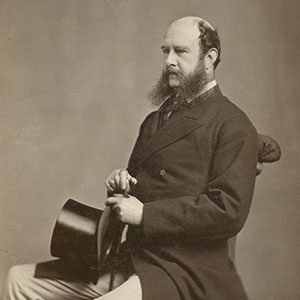
Governor Anthony Musgrave was the Governor of the Colony of British Columbia from 1872 to 1876. It was during his term of office that British Columbia officially joined Canadian Confederation on July 20, 1871. Prior to Confederation, British Columbia had been a separate British colony with its own system of government and its own laws. The decision to join Confederation was made by the colonial government of British Columbia, in consultation with the Canadian government and with the approval of the British government.
Governor Musgrave was appointed Governor of the Colony of British Columbia in 1872, after Confederation had already taken place. As such, he would not have been directly involved in the negotiations or the decision-making process leading up to Confederation. However, as Governor, he would have been responsible for implementing the changes that came with Confederation, including the transfer of power from the colonial government to the Government of Canada and the integration of British Columbia into the federal system. Governor Musgrave is known for his efforts to improve the administration of the colony and to promote economic development and progress.
Anthony Musgrave was sent to British Columbia as Governor in 1869 as part of the British colonial administration's efforts to strengthen the governance of the colony and help it move towards Confederation with Canada. At the time, British Columbia was facing a number of economic and political challenges, including a growing American presence, and the British colonial administration felt that a more experienced governor was needed to help address these issues. As governor, Musgrave was tasked with promoting stability and encouraging the development of the colony, as well as working towards its eventual integration into the Canadian Confederation.
During William Musgrave's governorship of the Colony of British Columbia, there were several key issues that faced the colony and the governor. Some of the main challenges included:
Relations with Indigenous peoples: Musgrave was tasked with resolving tensions between Indigenous peoples and settlers and addressing the ongoing issues of land rights.
Economic development: British Columbia was a relatively new and underdeveloped colony, and Musgrave implemented policies aimed at promoting economic development, including the encouragement of immigration to the colony.
Conflicts with the United States: There were disputes between Britain and the United States over the boundary between British Columbia and the United States, and Musgrave worked to resolve these conflicts.
Administration of justice: The colony was still in the process of establishing its legal system, and Musgrave was responsible for ensuring that the administration of justice was fair and effective.
Timeline
After leaving his post as governor of the Colony of British Columbia, William Musgrave held governor positions in several other British colonies, including:
St. Kitts: Musgrave served as governor of St. Kitts from 1871 to 1875.
Newfoundland: He served as governor of Newfoundland from 1876 to 1881.
Queensland: Musgrave held the position of governor of Queensland from 1883 to 1888.
After retiring from his governor positions, Musgrave returned to England and lived out the rest of his life there. There is no further information available on his activities or career after his retirement.
British Columbiahistory.ca is a visitor supported web site. If you would like to submit an article or opinion, please visit our blog at www.blog.British Columbiahistory.ca.
Reference: Article by (Staff Historian), 2023
Tel: 1 604 833-9488
Email: info@canadahistorysociety.ca

All content and images are protected by copyright to Access History