
History-Periods
Past eras

From pre-history to today
Choose your period

Pre history - Present
explore the different eras
Past eras
Choose your period
explore the different eras
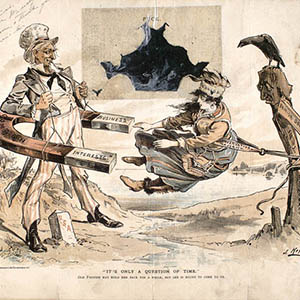
It is likely that the Foreign Office was involved in discussions and negotiations related to the Confederation of British Columbia, which took place in 1871. At the time, the Colony of British Columbia was considering joining the newly formed Dominion of Canada, and the British government would have had a role in these negotiations. The Confederation of British Columbia was ultimately successful, and the colony joined the Dominion of Canada on July 20, 1871.
It is possible that the Foreign Office was involved in other issues related to the Confederation of British Columbia, such as the terms of the agreement and the financial arrangements between the colony and the Dominion of Canada. The Foreign Office may also have played a role in negotiating the terms of the transfer of power from the colonial government to the government of the Dominion of Canada.
It is likely that the Foreign Office communicated with the colonial government in British Columbia, as well as with the government of the Dominion of Canada, during the Confederation process. The British government would have been interested in the terms and conditions of the Confederation agreement, and would have wanted to ensure that the interests of the British Empire were protected.
It is also possible that the Foreign Office communicated with other parties involved in the Confederation process, such as Indigenous nations in the colony and political and business leaders. The Foreign Office would have wanted to keep these parties informed about the progress of the negotiations and the implications of the Confederation for their interests.
British Columbia was a British colony before it joined Canadian Confederation in 1871. The British Foreign and Commonwealth Office would have had no direct role in the decision of British Columbia to join Confederation or in the negotiations that led to its joining. The United Kingdom was responsible for the foreign affairs of its colonies, including British Columbia, but the decision to join Confederation would have been a matter for the colonial government and the people of British Columbia to decide, in consultation with the Canadian government.
During the American Civil War, there was a debate in the United States over whether to demand the cession of British Columbia as payment for British support of the Confederacy, particularly their alleged role in allowing the Confederate warship CSS Alabama to be built in a British shipyard.
Some American politicians and commentators argued that the British government was indirectly supporting the Confederacy by allowing Confederate warships to be built in British shipyards, and that the United States should demand compensation for this support. There were even some who suggested that the United States should demand the cession of British Columbia as payment for British support of the Confederacy.
However, there were also those who opposed this idea. Some argued that the cession of British Columbia would be impractical and would not necessarily address the root causes of the conflict between the United States and Britain. Others argued that the demand for the cession of British Columbia would be too extreme and would risk alienating British opinion, which could have negative consequences for the future relationship between the two countries.
In the end, the United States did not formally demand the cession of British Columbia, but the debate over this issue reflected the broader tensions and disputes between the United States and Britain during the Civil War period, particularly over the issue of British support for the Confederacy. The resolution of these tensions, including the settlement of the "Alabama Claims" and the negotiation of a new treaty between the two countries, helped to pave the way for a more stable and peaceful relationship between the United States and Britain in the decades that followed.
The UK government would have been interested in the stability and prosperity of its colonies and would have taken these factors into consideration when assessing the decision of British Columbia to join Confederation. However, ultimately the decision was one for the people of British Columbia and the Canadian government to make.
Timeline
The British Foreign Office played a significant role in supporting Canadian Confederation against US influence in the mid-19th century. At the time, the United States was expanding rapidly westward and was seen as a threat to British interests in North America.
In the 1860s, a number of British officials in Canada and the Foreign Office in London saw the creation of a unified Canadian federation as a way to strengthen British influence in the region and counterbalance the growing power of the United States. The idea was that a strong, united Canada would be able to resist US expansionism and maintain British interests in North America.
The British Foreign Office provided diplomatic and financial support to the Canadian Confederation movement, including providing loans to help finance the construction of the Canadian Pacific Railway, which was seen as a vital link between British Columbia and the rest of Canada.
In addition, British diplomats worked to prevent the United States from interfering in Canadian affairs, particularly during the American Civil War. The British government's decision to support the Confederacy during the Civil War also had the effect of improving relations between Britain and Canada, as many Canadians were sympathetic to the Confederacy.
Overall, the British Foreign Office played a key role in supporting Canadian Confederation and in helping to shape the political and economic future of Canada as an independent nation.
British Columbiahistory.ca is a visitor supported web site. If you would like to submit an article or opinion, please visit our blog at www.blog.British Columbiahistory.ca.
Reference: Article by (Staff Historian), 2023
Tel: 1 604 833-9488
Email: info@canadahistorysociety.ca

All content and images are protected by copyright to Access History