
History-Periods
Past eras

From pre-history to today
Choose your period

Pre history - Present
explore the different eras
Past eras
Choose your period
explore the different eras
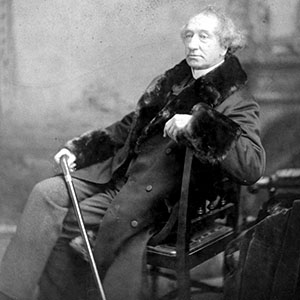
British Columbia (BC) is one of the 10 provinces of Canada. BC joined Confederation, or became a part of Canada, in 1871. The decision to join Confederation was made by the colonial government of BC at the time, and the terms of BC's entry into Confederation were negotiated between the colonial government and the federal government of Canada.
Some of the key issues that were negotiated as part of the Confederation process included the division of powers between the federal government and the provincial government, the financial arrangements between the two levels of government, and the rights and responsibilities of BC as a member of the Confederation.
Overall, the Confederation process was an important event in the history of BC and Canada, as it marked the establishment of BC as a province within the Canadian federation and helped to shape the political and economic relationships between BC and the rest of Canada.
There were several terms of Confederation that were agreed upon by the colonial government of British Columbia and the federal government of Canada when BC joined Confederation in 1871. These terms included:
Timeline
British Columbia became the sixth province to join the Canadian Confederation on July 20, 1871. However, the negotiations leading up to this event were complex and involved several factors.
In the early 1860s, British Columbia was a British colony that was struggling economically due to the decline of the fur trade and the gold rush. The colony also faced threats from the United States, which was expanding its territory in the Pacific Northwest.
As a result, British Columbia began to consider the idea of joining the Canadian Confederation, which was formed in 1867. The Confederation was a union of four provinces at the time: Ontario, Quebec, Nova Scotia, and New Brunswick.
Negotiations between British Columbia and Canada began in 1868 and continued for several years. One of the main issues that needed to be resolved was the building of a transcontinental railway that would connect British Columbia to the rest of Canada.
The British Columbia government demanded that the railway be built within ten years of joining the Confederation and that it be funded by the Canadian government. In 1871, the federal government agreed to these terms, and British Columbia officially joined the Confederation on July 20 of that year.
The inclusion of British Columbia in the Canadian Confederation was a significant milestone in the country's history. It helped to solidify Canada's presence in the Pacific Northwest and paved the way for the eventual expansion of the country from coast to coast.
British Columbiahistory.ca is a visitor supported web site. If you would like to submit an article or opinion, please visit our blog at www.blog.British Columbiahistory.ca.
Reference: Article by (Staff Historian), 2023
Tel: 1 604 833-9488
Email: info@canadahistorysociety.ca

All content and images are protected by copyright to Access History